

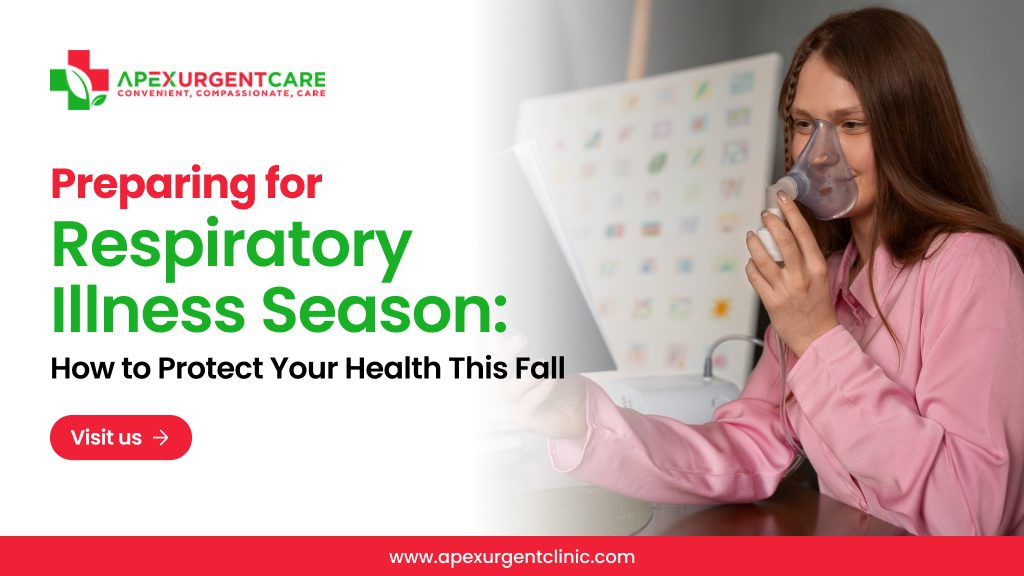
As fall approaches, families and communities begin preparing for another respiratory illness season. Influenza (flu), COVID-19, RSV, and other respiratory infections can cause symptoms ranging from mild congestion and cough to more serious issues. While current respiratory illnesses vary over time and by location, staying informed and taking preventive steps can help protect you and those around you.
For people searching for respiratory illness care in Houston, understanding common symptoms, prevention strategies, and when to seek medical attention makes it easier to respond when illness occurs.
What Respiratory Illnesses Are Common in Fall?
Several viruses can circulate during the fall and winter months. These include influenza, COVID-19, and respiratory syncytial virus (RSV). Other respiratory viruses, including rhinoviruses and enteroviruses, can cause symptoms such as cough, fever, nasal congestion, and fatigue.
Symptoms can overlap, so it may not always be possible to determine which infection you have based on symptoms alone. Depending on your symptoms, medical history, age, and risk factors, a healthcare provider may recommend testing or other evaluation.
Common fall respiratory infections may cause symptoms such as:
- Cough
- Runny or stuffy nose
- Sore throat
- Fever or chills
- Fatigue
- Headache
- Body aches
- Shortness of breath
Some people experience mild symptoms and recover with supportive care, while others may be at risk of complications. People with certain chronic medical conditions, older adults, young children, and individuals with weakened immune systems may need attention during respiratory illness season.
How Can You Prepare for Respiratory Illness Season?
Prevention starts with everyday habits. The CDC recommends immunizations, practicing good hygiene, improving indoor air quality when possible, and taking precautions when you are sick.
Talk with your healthcare provider about which vaccines, including seasonal influenza and COVID-19 vaccination. Depending on age and individual circumstances, RSV immunization may be recommended.
Regular handwashing, cleaning frequently touched surfaces, and improving ventilation can also help reduce the spread of respiratory viruses.
After developing respiratory symptoms, stay home and limit close contact with others to reduce transmission.
When Should You Seek Medical Care?
Seek respiratory infection treatment if you develop persistent or worsening symptoms, fever, dehydration, weakness, or other concerning symptoms, contact a healthcare provider.
Seek emergency medical attention for serious warning signs such as difficulty breathing, chest pain or pressure, new confusion, fainting, or other severe or rapidly worsening symptoms.
How Can Primary Care Help?
Preparing for respiratory illness season is not about treating an infection after the symptoms appear. A primary care Houston provider can help you stay current with preventive care, review your health history, manage chronic conditions, and discuss vaccinations and other ways to reduce your risk of serious illness.
At Apex MD Primary Care & Wellness Center, our team provides primary care and timely evaluation for appropriate health concerns. If you develop respiratory symptoms, we can help assess your condition and determine whether you need treatment, additional testing, follow-up care, or a higher level of medical attention.
Prepare for Fall with Your Health in Mind
This respiratory illness season, stay informed, practice good hygiene, follow recommended preventive measures, and note changes in your health.
Developing a cough, fever, congestion, or other respiratory symptoms?
Schedule an appointment with Apex MD Primary Care & Wellness Center and make your health part of your fall preparation.