

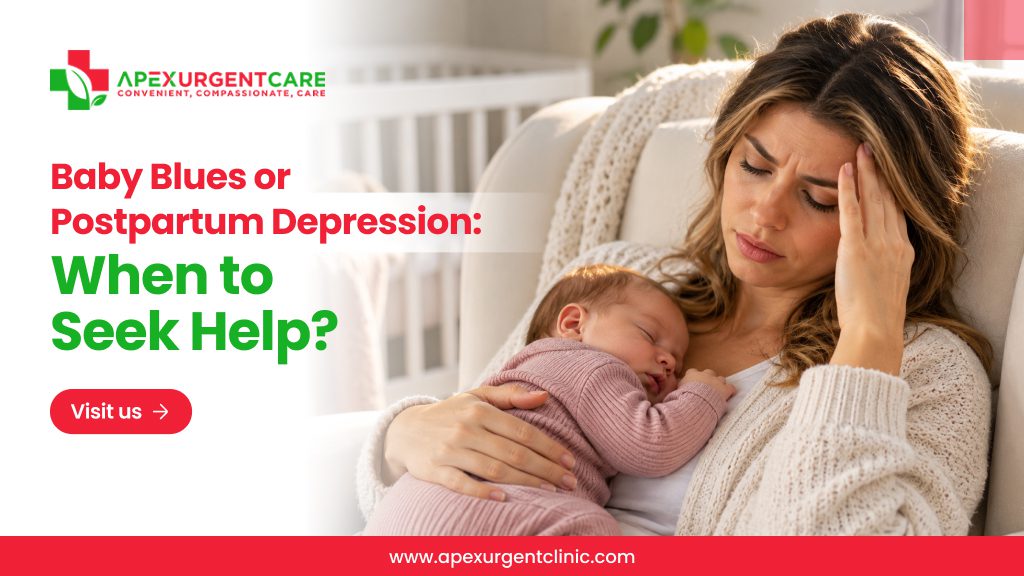
The arrival of a baby is described as life’s happiest moment. But behind the beautiful pictures and congratulatory messages, new mothers experience sadness, anxiety, exhaustion, and emotions they struggle to understand. If motherhood feels harder than expected, you are not failing as a parent.
At Apex Urgent Care Clinic, we believe every mother deserves compassionate care, understanding, and access to health information. Recognizing the difference between the baby blues and postpartum depression (PPD) is an important step towards recovery.
Baby Blues or Postpartum Depression: What’s the Difference?
After childbirth, hormonal changes, interrupted sleep, and the demands of caring for a newborn can affect emotional well-being.
The baby blues are common and may cause tearfulness, mood swings, irritability, and feelings of worry. These symptoms begin within the first few days after delivery and improve within about two weeks.
Postpartum depression, however, is more intense and persistent. It can develop in the weeks or months after childbirth and may interfere with daily activities, relationships, and bonding with the baby. It is a treatable medical condition, not a personal weakness or a sign of being a bad mother.
According to the Centers for Disease Control and Prevention (CDC), approximately 1 in 8 women with a recent live birth reports symptoms of postpartum depression. This is why maternal mental health deserves the same attention as physical recovery.
Recognizing the Signs of Postpartum Depression
Every mother’s experience is different, but common postpartum depressionsymptoms include:
- Persistent sadness, emptiness, or frequent crying.
- Excessive worry, anxiety, or irritability.
- Feelings of guilt, hopelessness, or worthlessness.
- Loss of interest in activities once enjoyed.
- Changes in appetite, energy, or sleep beyond typical newborn-related disruptions.
- Difficulty concentrating or making decisions.
- Feeling disconnected from the baby or overwhelmed by everyday responsibilities.
These symptoms should not be ignored. If you experience frightening or distressing thoughts, talk to a healthcare professional. If you feel unable to keep yourself or your baby safe, seek emergency assistance immediately.
What Causes Postpartum Depression?
There is no single cause of postpartum depression. Hormonal changes following delivery, sleep deprivation, a personal or family history of depression, pregnancy complications, and stressful childbirth experiences may contribute.
Limited social support, financial pressure, relationship difficulties, and the challenges of adjusting to parenthood can also increase vulnerability.
Importantly, postpartum depression can affect any mother, including those with planned pregnancies, supportive families, and no previous mental health concerns. You do not have to face it alone.
Getting Help: Treatment Can Make a Difference
Postpartum depression is treatable, and treatment may include psychotherapy, medication when appropriate, practical support, and regular follow-up with a qualified healthcare professional.
Talking about how you feel is a first step, and partners and family members can help by listening without judgment, sharing baby-care, supporting rest, and encouraging professional care.
If you are concerned about your emotional health after childbirth, our Houston doctor can be a starting point for discussing your symptoms and understanding the appropriate next steps.
Don’t wait until you feel completely overwhelmed to reach out.
You Deserve Care, Too
Motherhood comes with changes. You deserve support through the difficult moments just as much as you deserve to celebrate the joyful ones.
At Apex Urgent Care Clinic, we encourage new mothers and their families to take postpartum mental health seriously. Recognizing the signs early and seeking appropriate care can support recovery and improve well-being for the family.
Concerned about postpartum depression? Contact Apex Urgent Care Clinic to discuss your concerns and learn about appropriate care options. Because taking care of yourself is also part of taking care of your baby.